






THE ORIGIN OF OUR TEAK
From South Asia. Crafted by hand.
One wood has been trusted for centuries. One craft has shaped it with care. We source directly from the forests — no shortcuts, no middlemen.

Teak plantation - Central Java, Indonesia
01 · THE WOOD
Teak from Southeast Asia
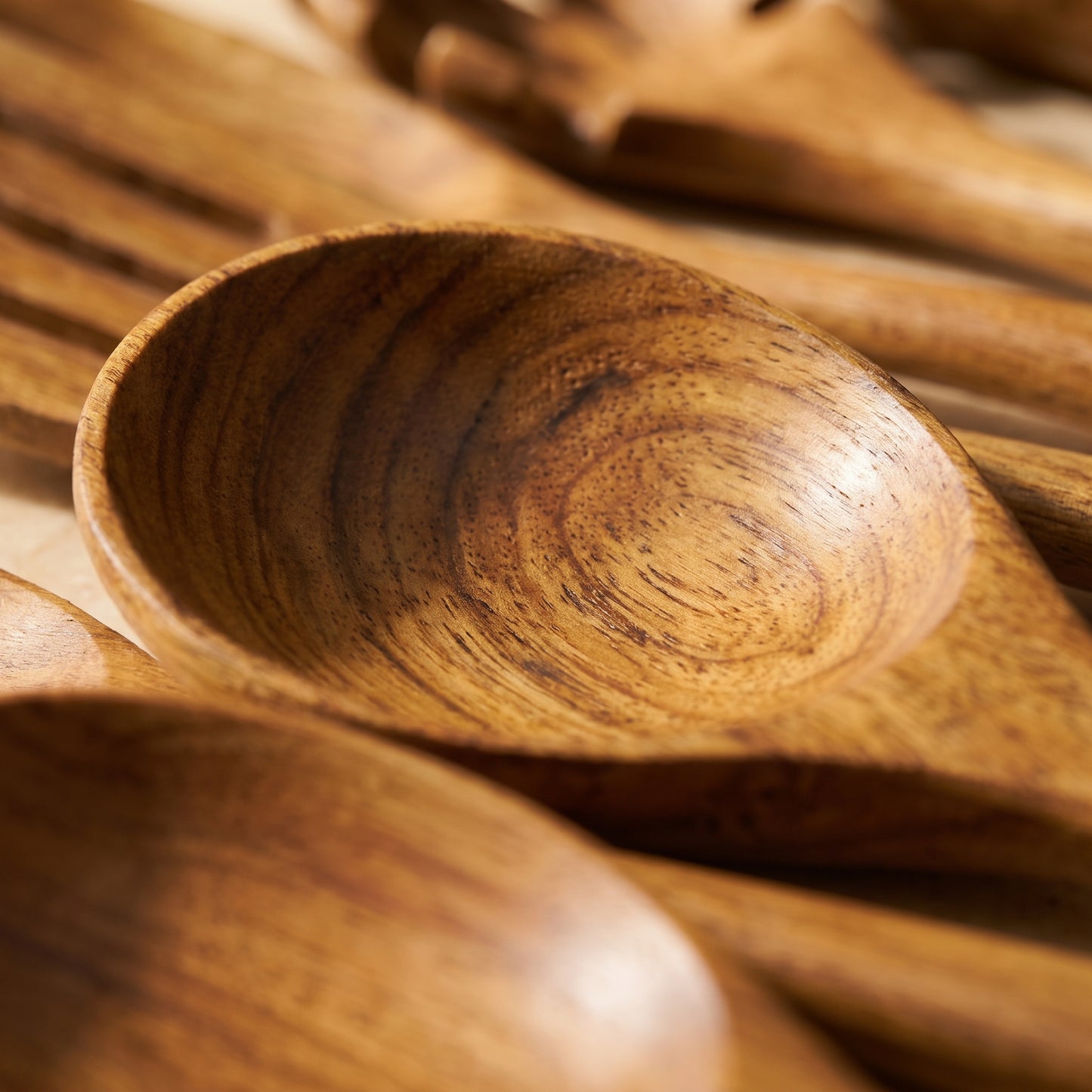
Grown in the tropical forests of Southeast Asia, teak is naturally dense, water-resistant, and built to last generations.
02 · THE CRAFT
Shaped by skilled hands
Every utensil is carved and finished by craftspeople who have worked with teak wood for generations. No machines. No shortcuts.
03 · THE PROMISE
Sustainably sourced. Always.
Harvested responsibly, finished without chemicals, shipped directly to you. What's in your kitchen should be as natural as your food.
"My grandfather carved teak with the same tools I use today. The wood hasn't changed. Neither have we."
AMAN — MASTER CRAFTSMAN Java, Indonesia · Supply partner
The difference
What you get with Teak & Grain.
Not all kitchen utensils are created equal. Here's why it matters what you use to stir, flip, and serve.
| Teak & Grain | Others | |
|---|---|---|
|
Safe for non-stick cookware
Incredibly gentle on all surfaces. Never worry about scratching, scraping, or ruining your expensive non-stick, ceramic, or cast iron pans.
|
||
|
Zero melted microplastics
Plastic and nylon utensils begin to invisibly degrade at high heat, shedding toxins into your meals. Teak is 100% natural and safe.
|
||
|
Naturally heat resistant
Confidently rest a spoon on the edge of a hot pan or stir boiling soups without warping, melting, or conducting heat up the handle to burn your hand.
|
||
|
Sustainably sourced teak
Harvested responsibly from managed plantations — every piece is traceable to its origin, not mass-produced from deforested woods.
|
||
|
Built to last decades
Plastic melts, silicone tears, and cheap bamboo splinters. Properly maintained teak is a premium purchase that outlasts everything else in your drawer.
|
||
|
30-day risk-free trial
Cook with them in your kitchen for 30 days. Full refund if you're not convinced — no questions asked, no return shipping hassle.
|


Plastic and nylon utensils invisibly degrade and melt at high temperatures; teak remains solid, safe, and entirely natural.
The hidden danger
What melts into your meals.
You'd be surprised.
Plastic and nylon utensils seem harmless. But every time they touch a hot pan, they invisibly degrade, warp, and melt. Teak is entirely different. It is naturally heat-resistant, meaning nothing synthetic ever leaches into your family's food.
Care guide
Nine pieces. Built to last.
Here's how to keep them that way.
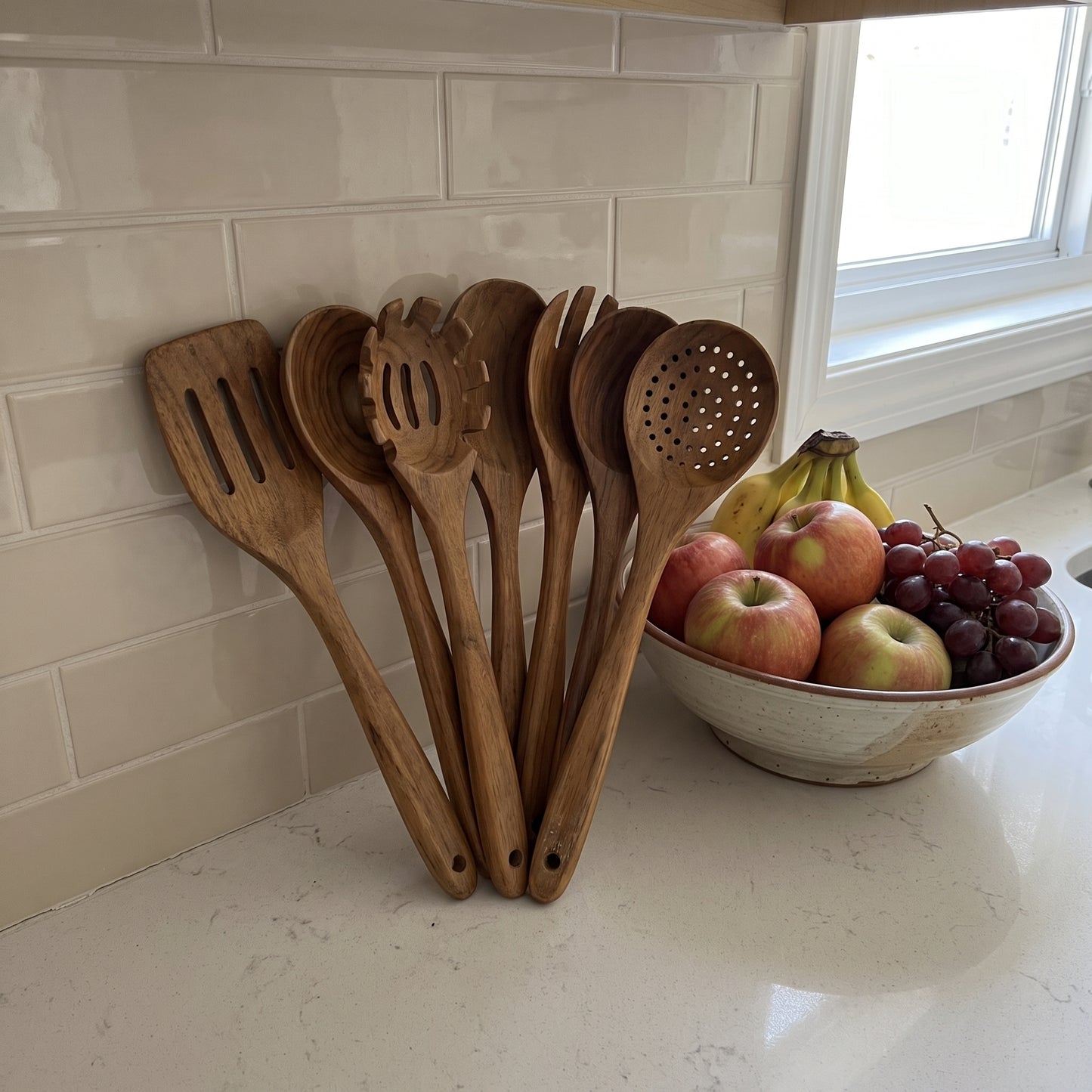
Teak is naturally resilient and moisture-resistant — but your utensils will last decades longer with a little routine care. It takes less than a minute.
- Put them in the dishwasher
- Leave them soaking in water or cooking liquid
- Rest them in a hot pan or on the stovetop
- Use olive or vegetable oil — they go rancid in wood
- Rinse and hand wash immediately after cooking
- Dry thoroughly before storing
- Oil every 2–3 months with food-grade mineral oil
- Hang using the hole or store upright in a crock
Safe for non-stick cookware: Teak is naturally smooth and won't scratch your non-stick pans, ceramic, or enamel cookware — unlike metal utensils. Every piece in this set is safe to use on any surface.
FAQ
Questions, answered.
Everything you need to know before — and after — you order.
Still have a question? Get in touch — we usually reply within a few hours.
High quality, no chips, thanks to the seller!
The Teak Essentials Collection
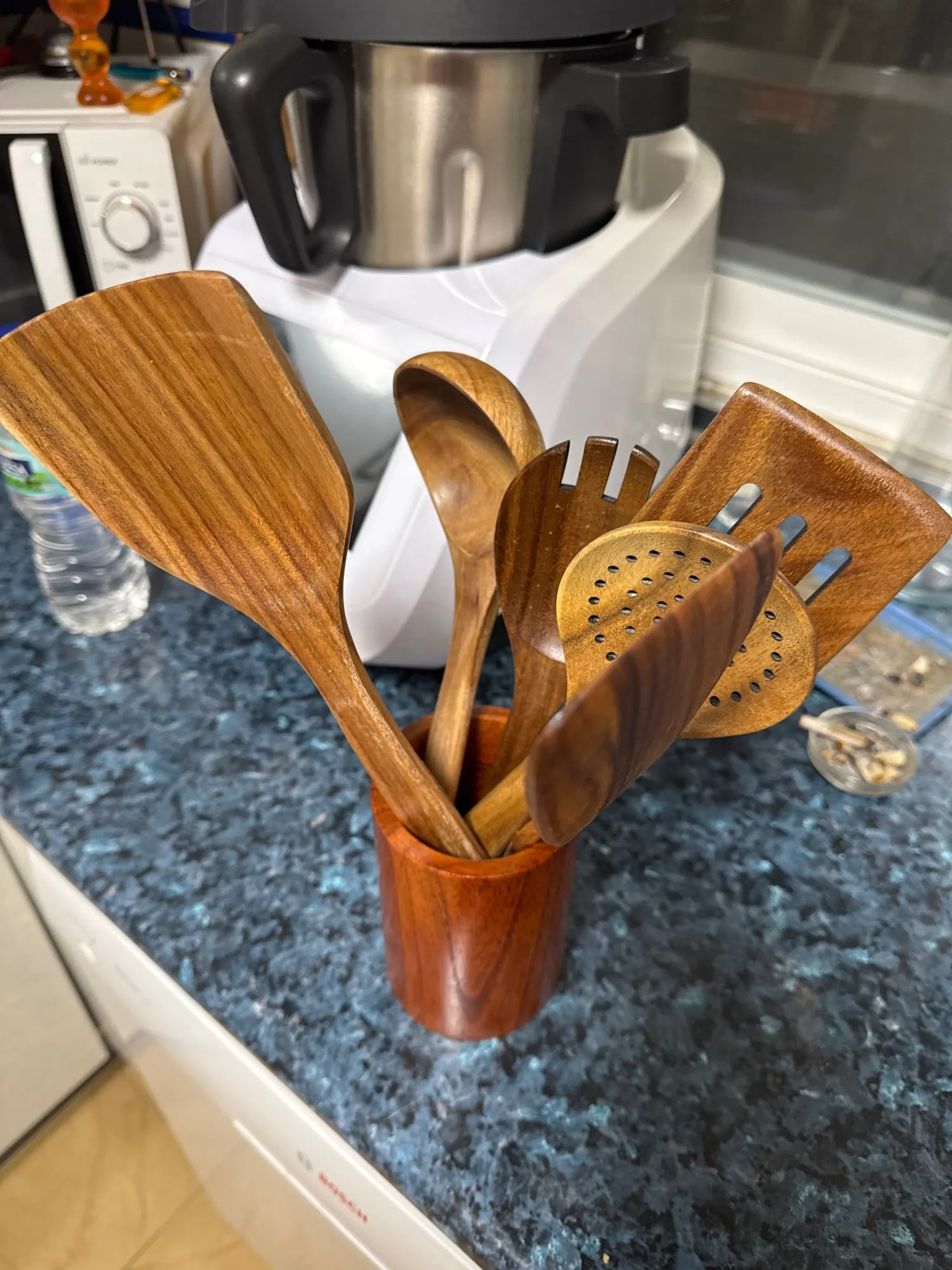
Good quality. I loved them, they don't leave flavors in the food. The finish is smooth.
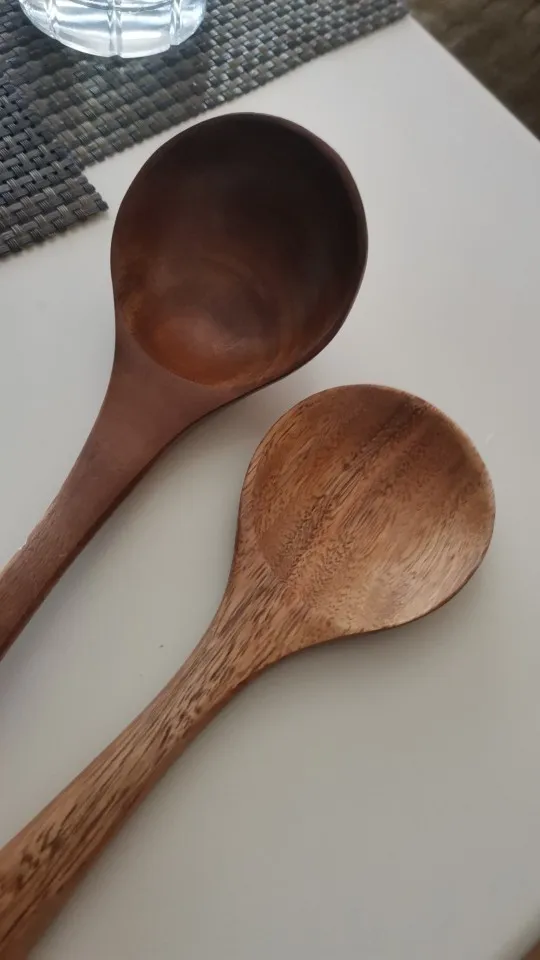
The Teak Essentials Collection
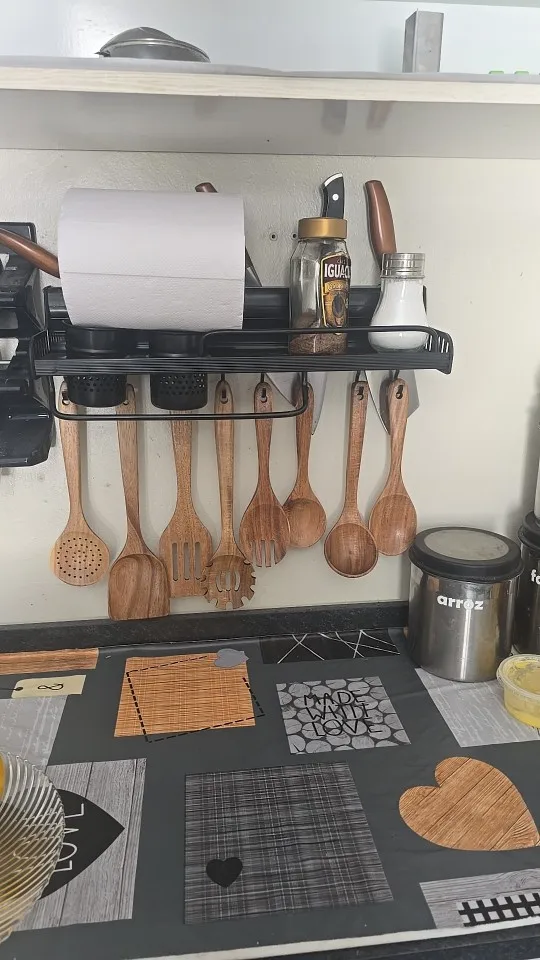
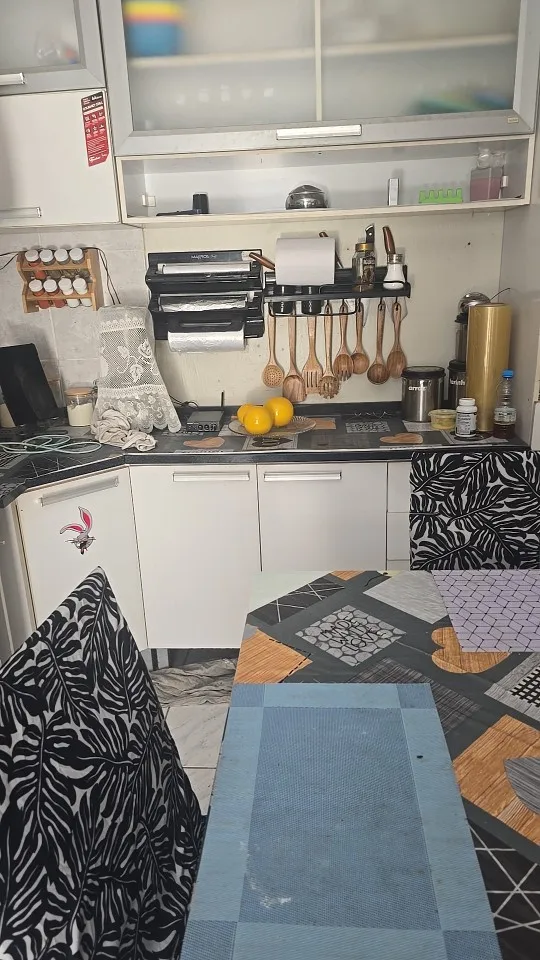
The Teak Essentials Collection
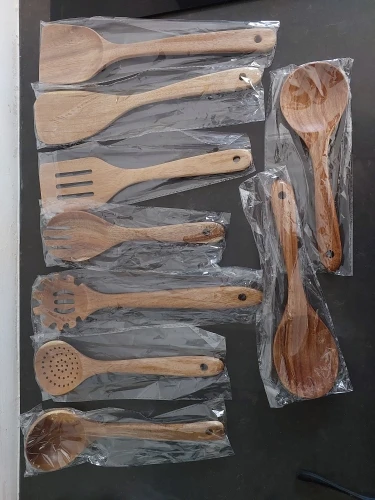
It does not match, the ladle and the flat skimmer are missing, with an extra spoon and flat spatula.
Return/refund requested.
Let's see how it goes?
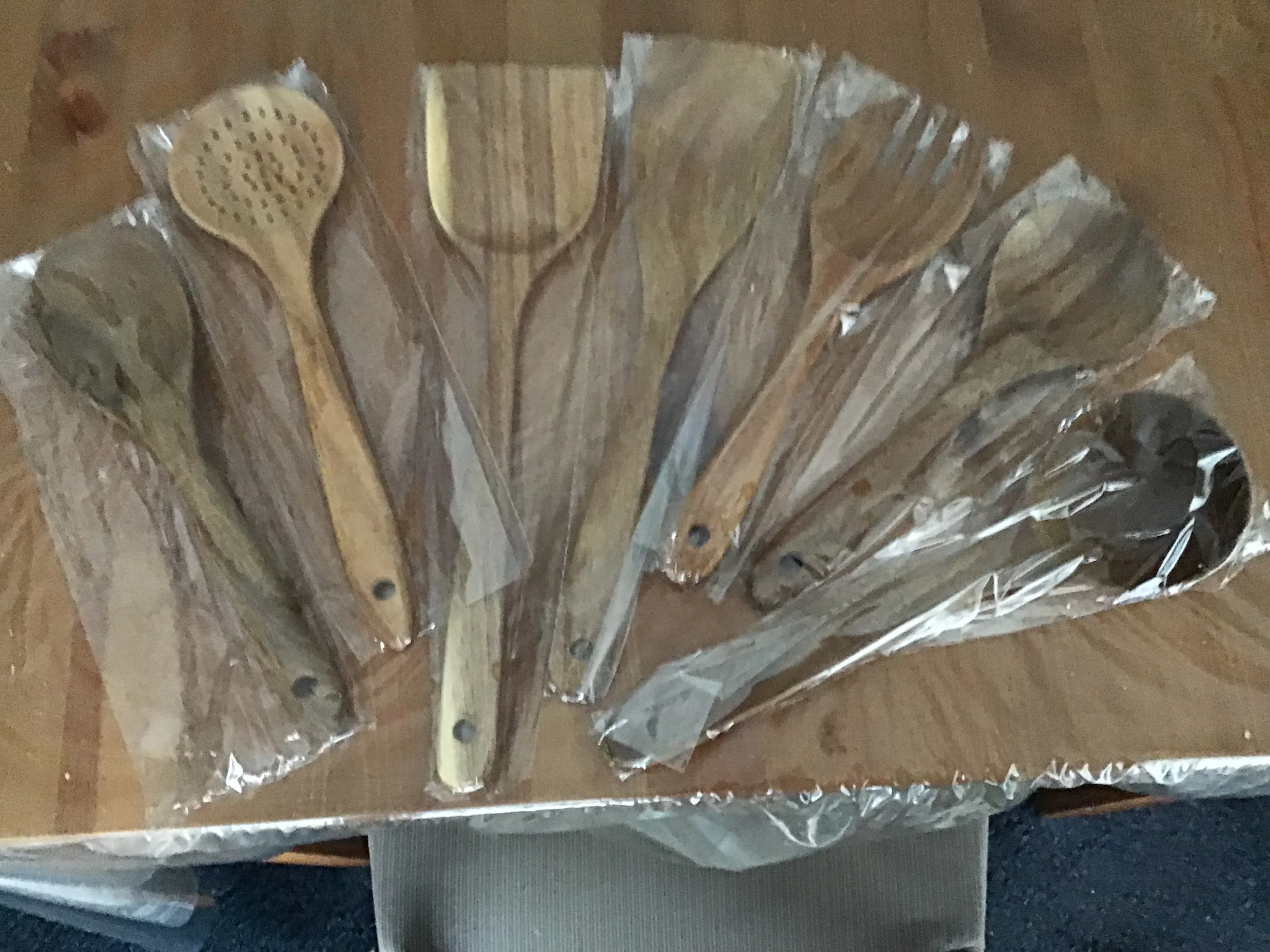
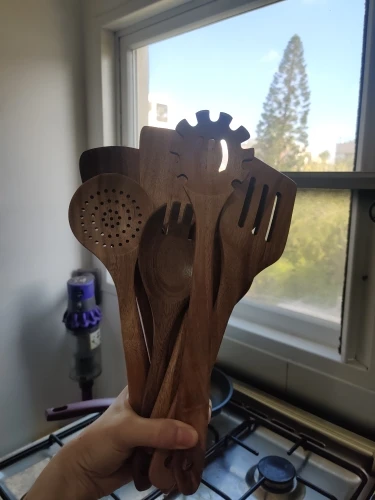
Some of the utensils were a little shorter than i expected. but they're all well made and i've started using them
The Teak Essentials Collection
They don't seem bad at first glance, but how do they respond over time and when washed?
They don't seem bad, although the other pair I ordered seem better, but we'll see over time and how they respond when washed.
Todo completo. Tiene un color marrón oscuro pero parece bien.
Quality is high
The Teak Essentials Collection
The Teak Essentials Collection
The Teak Essentials Collection
The Teak Essentials Collection
The Teak Essentials Collection
The Teak Essentials Collection
Excellent quality, I recommend it.
Excellent, just as described.
Very satisfying to keep this set in my utensil drawer. love the wood color and love all the different style of spatulas/ spoons.
The Teak Essentials Collection
Excellent quality, size, and packaging.
Thank you very much
Looks great. Some spoons are a little small. But apart from that the feel good.
The Teak Essentials Collection
The Teak Essentials Collection
The Teak Essentials Collection
They are not very big but it's okay.
Looks and feels well made
The Teak Essentials Collection
The Teak Essentials Collection
The Teak Essentials Collection
Looks good.
The Teak Essentials Collection