


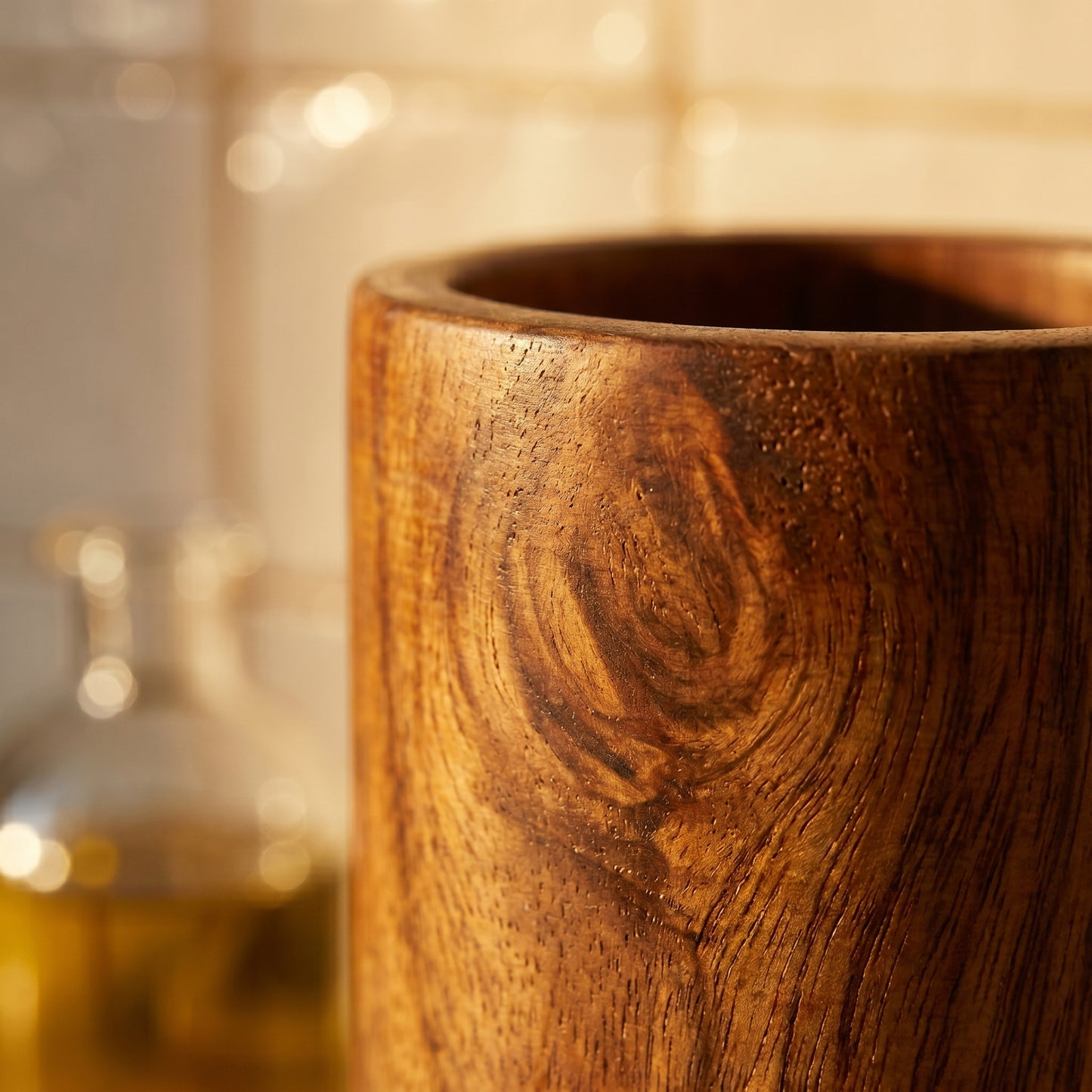
WHERE TEAK COMES FROM
From South Asia. Crafted by hand.
One wood has been trusted for centuries. One craft has shaped it with care. We source directly from the forests — no shortcuts, no middlemen.

Sustainably harvested teak — one of the world's most durable natural materials
01 · THE WOOD
Teak from Southeast Asia
Grown in the tropical forests of Southeast Asia, teak is naturally dense, water-resistant, and built to last generations.
02 · THE CRAFT
Shaped by skilled hands
Every utensil is carved and finished by craftspeople who have worked with teak wood for generations. No machines. No shortcuts.
03 · THE PROMISE
Sustainably sourced. Always.
Harvested responsibly, finished without chemicals, shipped directly to you. What's in your kitchen should be as natural as your food.
"My grandfather carved teak with the same tools I use today. The wood hasn't changed. Neither have we."
AMAN — MASTER CRAFTSMAN Java, Indonesia · Supply partner
The difference
What you get with the Teak Column.
Not all utensil holders are created equal. Here's why it matters where your everyday cooking tools live.
| Teak & Grain | Others | |
|---|---|---|
|
Sustainably sourced solid teak
Carved from responsibly harvested premium wood, offering a rich countertop aesthetic rather than cheap, mass-produced plastic or wire racks.
|
||
|
Heavy, tip-proof base
Solid teak provides a naturally weighted foundation. You can load it up with your heaviest ladles and whisks without it constantly tipping over like lightweight plastic bins.
|
||
|
Naturally moisture & mold resistant
Teak’s high concentration of natural oils actively repels water from freshly washed tools. Plastic and bamboo holders easily trap moisture and grow mold at the bottom.
|
||
|
Toxin & microplastic free
Every time you drop a utensil into a plastic holder, it scrapes the bottom. With the Teak Column, you never risk getting scraped microplastics onto the tools you use to cook your food.
|
||
|
Shatterproof durability
Accidents happen in a busy kitchen. If knocked off the counter, solid teak bounces back, while popular ceramic and glass crocks shatter into dangerous pieces.
|
||
|
30-day risk-free trial
Try it on your counter for 30 days. If it isn't a massive upgrade to your kitchen, we'll issue a full refund—and you don't even have to ship it back to us.
|


Standard crocks trap stagnant water and breed mold; solid teak naturally repels moisture.
What it fixes
What lives at the bottom
of your utensil crock.
You'd be surprised.
Plastic and ceramic holders might look clean on the counter, but their non-porous bottoms trap water from freshly washed tools, creating a dark breeding ground for mold and bacteria. Solid teak is different. Its natural oils actively repel water, keeping your cooking tools clean and dry.
Care guide
A holder that lasts a lifetime.
If you treat it like one.
Teak is naturally water-resistant and incredibly resilient. A little care goes a long way — here's everything you need to know.
- Put it in the dishwasher
- Let water pool inside the bottom
- Place it directly touching a hot stove
- Use olive or vegetable oil — they go rancid
- Give tools a quick shake before putting them in
- Hand wash with mild soap when it gets dusty
- Let the interior dry completely after washing
- Oil occasionally with food-grade mineral oil
Everyday pro-tip: While teak naturally resists moisture, no wood loves standing water. Giving freshly washed whisks and spatulas a quick wipe or shake before dropping them back into your Teak Column ensures it stays beautiful for decades.
FAQ
Questions, answered.
Everything you need to know about the Teak Column before you order.
Still have a question? Get in touch — we usually reply within a few hours.